
The heaviest rocket of the Indian Space Research Organisation -- LVM3-M2/OneWeb India-1 -- blasted off from the Sriharikota spaceport on Sunday to place 36 broadband communication satellites into the Low Earth Orbit (LEO) for a UK-based customer.

ISRO, in a tweet, said EOS-04 was placed into an intended sun synchronous polar orbit of 529 km altitude at 6.17 am.
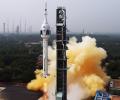
Chandrayaan-4 will involve at least two separate launches of the heavylift LVM-3 rocket that will carry five different components of the mission which will be assembled in orbit.

Billionaire and Mahindra Group chairman Anand Mahindra along with top Silicon Valley investors Naval Ravikant and Balaji Srinivasan are backing space tech start-up Agnikul as part of a new funding round. Chennai-based Agnikul said, on Thursday, that it has raised $11 million in Series A funding round led by Mayfield India. It is the largest funding round for a private Indian space technology company in the country. Existing investors pi Ventures, Speciale Invest and Artha Venture Fund also invested in this round.

There is a huge spurt in demand to launch smaller satellites, those as light as 1 kg, with a lifespan of two to three years. But there aren't enough rockets to carry these, reports T E Narasimhan
Research and markets estimated in May that the global opportunity for small and mini satellites would grow nearly one and half times to $5.32 billion by 2021

After the historic success of its Chandrayaan-3 lunar mission, Indian Space Research Organisation (ISRO) is going full throttle with its plans to send Indian astronauts for the first time to the Moon by 2040, ISRO Chairman S Somanath said.

The Indian Space Research Organisation has resolved to alight its lander on the lunar surface with Chandrayaan-3 in addition to a maiden solar expedition in 2020.
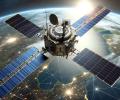
India is marching towards becoming the fourth country in the world to have space docking technology.
ISRO's vendor policy and quality control processes are under scanner.

Aditya L1, the first space based Indian mission to study the Sun underwent the second earth-bound manoeuvre successfully, during the early hours on Tuesday, Indian Space Research Organisation (ISRO) said.
If successful, this would increase capacity to hurl small satellites into space, meeting both local demand and serving global customers.
Over 32 missions -- satellites and rockets -- have been planned for the year.

The new year will witness two unmanned missions under the "Gaganyaan" project, deep ocean exploration project, "Samudrayaan" and many more.

Scientists are working on conducting various tests for the ambitious Gaganyaan mission and the agency is coordinating with the Navy and others in this connection, he said.
The space agency has set 2020 as the deadline for the first privately built rocket to be launched into space.
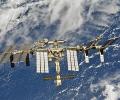
Once ISRO masters the technology to send humans into space, the next step will be experimenting with technologies allowing humans to live in space.

Chandrayaan-3's success is a must for India's space ambitions; we can't afford to lose out. And for realising our space dreams, the Indian private sector must be encouraged because if we lose this race, the moon, Mars, and mineral-rich asteroids will already be crowded before we reach there.

Aditya-L1 is the first Indian space-based observatory that will study the Sun from a halo orbit around the first Sun-Earth Lagrangian point (L1), which is located roughly 1.5 million km from the Earth.

ISRO has an opportunity to be the one-stop shop for satellite manufacturing, and Alpha Design is just the booster it needed.
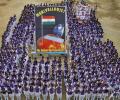
Godrej and some other firms are frustrated at what they say is the slow execution of projects and lack of government support, which are hampering India's efforts to compete with China and Russia as a cheaper option for launching satellites.

'We are looking at a joint venture between ISRO and a few companies to assemble the PSLV and launch it from Sriharikota.' 'In a month or two, the vehicle assembly building will be ready.' 'After that, we could see 13, 14 launches a year.'

Global analysts say a successful launch of operational GSLV MkII rocket will reduce dependency for ISRO on foreign launchers.

K Sivan has to hasten the effort to bring in private players into satellite and rocket building and replicate India's software success in aerospace.
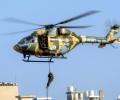
'The tools of warfare are changing. The MoD must deepen its engagement with technology thinkers that can present compelling visions of where warfare may be heading.'

The SSLV is designed to be affordable and amenable to industry production and aimed to function as a launch-on-demand platform for mini, micro or nano satellites.

'India has got a unique opportunity to get more and more business from outside as India is cost-effective and reliable.'

Around 600 scientists and engineers are hoping for the best as they forge ahead with plans of making an indigenous version of a space shuttle.
'ISRO facilities are very expensive and any damage caused by these start-ups can create havoc to our space programme.'

With the launch of GSLV-MK III, slated for April, it will be able to cater to bigger satellites as well.
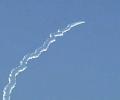
India on Monday successfully launched the first technology demonstrator of indigenously made Reusable Launch Vehicle, capable of launching satellites into orbit around earth and then re-enter the atmosphere, from Sriharikota in Andhra Pradesh.

They made history for India and the world.

On the morning of February 15, ISRO will hurl into space using the Polar Satellite Launch Vehicle three Indian satellites and 101 small foreign satellites. No other country has ever tried to hit a century in a single mission.

Top space scientist G Madhavan Nair said it may take ten years for the country to put in place such an operational rocket.

Pride is all ours and of those who made a beeline to Halls 3 and 5 that showcased indigenous defence technologies at the Make In India Week.

'The heat shield technology for re-entry vehicles was first mastered in DRDO for the Agni missile.' 'This is why the Americans were so opposed to Agni in the 1980s, unlike other missiles -- it was a re-entry vehicle.'

Dr Bhabha and Dr Sarabhai didn't feel guilty for their ambitions; it was for those 'mad scientists' that India is a powerhouse -- both at the atomic level and in the vastness of space, observes Kumar Abishek.
The success of the PSLV-C34 mission is a result of ISRO's professionalism and the hard work put in by their scientists over the last many decades., says Ajay Lele.

India, with its demonstrated capabilities of undertaking low cost high value inter-planetary travel, offers great opportunities for NASA to work with.
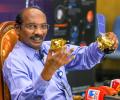
ISRO chairman K Sivan said all activities related to the third lunar mission -- Chandrayaan-3 -- were going on smoothly but its launch may shift to next year.
 © 2026 Rediff.com - Advertise with us - Disclaimer - Privacy Policy - Sitemap - Feedback - About us - Terms of use - Grievances